


Subscribe and receive email notifications of new blog posts.
 RSS Feed
- 2026 | 39 Posts
- 2025 | 48 Posts
- 2024 | 48 Posts
- 2023 | 48 Posts
- 2022 | 48 Posts
- 2021 | 48 Posts
- 2020 | 48 Posts
- 2019 | 48 Posts
- 2018 | 50 Posts
- 2017 | 52 Posts
- 2016 | 34 Posts
7
Here's How To Tell The Size Of Home You Need
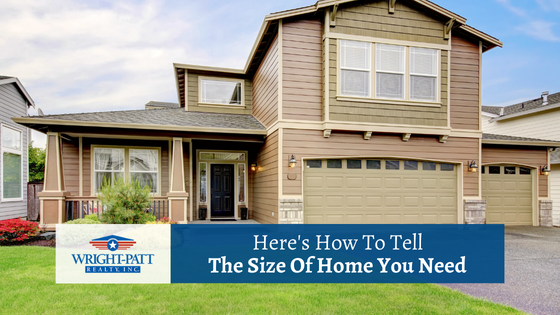
For years, the average size of the typical American home kept growing. But in recent times, that trend appears to be reversing, as Americans are seeking slightly smaller homes. Why is that? Haven't we always thought in terms of bigger is better? Turns out that's not necessarily the case. Many Americans want to simplify as they realize they don't need as much space as they thought they did. What's more, a smaller home requires less energy to cool, heat, and run the lights.
If you're shopping for a new home in Beavercreek homes for sale, you'll want to do some serious pondering about what size home you really need. And who better to advise you than our REALTORS®? Read on for some good advice.
How Much Room Do You Need?
Of course, your space needs will differ as you age. When you're young, there are two of you, and you're planning that there will be more, your need for space and the number of rooms will be greater than when you're older.
As we age, we start shedding possessions and square footage for these reasons:
- The kids are away in college, and you're no longer entertaining the way you once did;
- You're a senior and want to simplify, rearranging the space so you can get around better; and
- For whatever reason, your spouse or partner is no longer in the picture.
Many life circumstances will play into your need for more or less space. Do you have a kid who's just not keen on moving on? Do you figure on an elderly relative moving in with you? All these varying factors will impact the size of the home you choose when you're ready to move.
Most guides say 600 square feet is how much you should figure for each occupant of the home. So for a family of 4, figure on 2400 square feet — at least. But other factors play a role in the computation. For instance, most living rooms/kitchens//dining areas have opened up over recent decades, so one room sort of flows into another. That means you have to fudge a bit on your figures for these rooms. Here's a computational guide that might help you decide how much of a home you need.
One last bit of advice: Just remember that new home size is shrinking nationwide. Why? The main reason is builders want to contain costs as the cost of materials goes up. What's more, buyers want to downsize to contain their costs. It doesn't appear this trend will shift anytime soon, so don't try to buck it. Do not fall into the trap of buying a bigger house that will be hard to afford and perhaps hard to sell.
How Much House Can You Afford?
As you grapple with whether you need walk-in closets, more than three bedrooms, and numerous bathrooms, you will also need to think about how much house you can afford in mortgage payments.
Prevailing wisdom is that you should follow the 28/36 rule; that is, don't spend more than 28 percent of your gross (pre-tax) monthly income on costs to do with the home. Pay no more than 36 percent of your income on total debts (including the mortgage) — which means credit cards and other loans, like auto and student loans. This is a good rule to follow when assessing home affordability. By all means, take your overall financial situation into account when figuring out what you can afford.
Determining house size is an important part of the home-buying process. Got questions? Contact Wright-Patt Realty.